A Reference Framework for Surfskating Boards and Component Systems
1. Introduction
As Surfskating continues to expand globally, equipment plays a central role in shaping safety, performance, and user experience. The diversity of board designs and mechanical systems has contributed to innovation, but also introduces variability in quality and consistency.
The International Surfskating Federation (ISF) establishes this Global Equipment Certification Framework to:
- Provide a unified reference for Surfskating equipment
- Support safety, reliability, and performance consistency
- Encourage innovation while maintaining baseline standards
- Enable global recognition of certified products
This framework is designed as a reference standard, supporting alignment across manufacturers and markets.
2. Certification Philosophy
The ISF equipment certification system is based on:
2.1 Safety as Foundation
Products should meet basic safety and reliability expectations.
2.2 Performance Consistency
Equipment should enable stable and predictable riding experience.
2.3 Compatibility & Functionality
Systems should function effectively within Surfskating movement dynamics.
2.4 Innovation-Friendly Approach
Standards should not restrict new designs or technologies.
2.5 Global Reference Alignment
Certification serves as a recognized benchmark, not a restrictive barrier.
3. Scope of Certification
This framework applies to:
- Surfskating boards (complete systems)
- Decks
- Truck systems
- Wheels and related components
4. Equipment Definition
A Surfskating board is defined as:
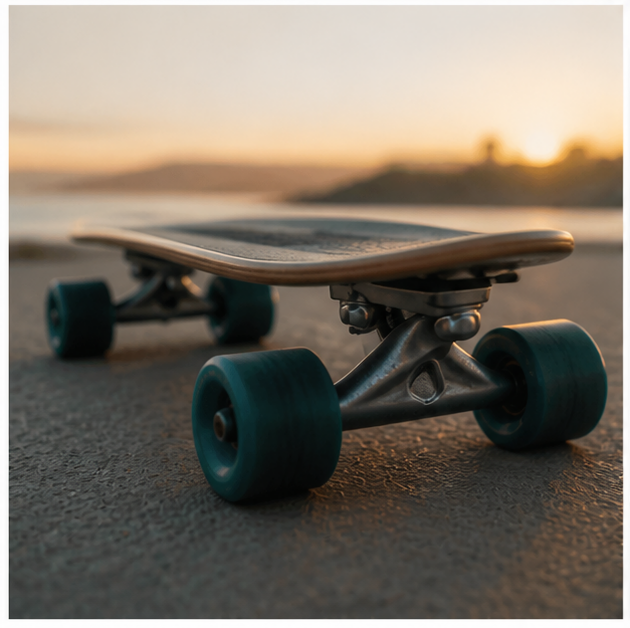
A board system designed to enable dynamic carving and pumping motion that simulates surfing-like movement on land.
5. Certification Categories
5.1 Complete Board Certification
Covers full system performance including:
- Deck
- Truck system
- Wheels
5.2 Component Certification
Individual certification for:
- Deck structures
- Truck mechanisms
- Wheel systems
5.3 Performance-Level Classification
Products may be categorized as:
- Entry-Level
- Standard
- Performance
- Advanced
6. Core Evaluation Criteria
6.1 Structural Integrity
- Material durability
- Resistance to deformation
- Stability under normal usage
6.2 Functional Performance
- Ability to perform carving motion
- Responsiveness of truck system
- Smoothness of ride
6.3 Stability & Control
- Balance under movement
- Predictable turning behavior
- Control at varying speeds
6.4 Safety Considerations
- Absence of critical failure points
- Reliable component attachment
- Safe user interaction
6.5 User Experience
- Flow consistency
- Ride comfort
- Adaptability to different skill levels
7. Testing Approach (Light Standard Model)
ISF adopts a flexible testing approach:
- Practical riding evaluation
- Manufacturer-provided data (optional)
- Demonstration of functional performance
⚠️ No overly complex laboratory requirements at early stages.
8. Certification Process
Step 1: Application
Manufacturer submits product information
Step 2: Documentation
- Product specifications
- Optional testing data
- Visual materials
Step 3: Evaluation
- Functional assessment
- Light verification
Step 4: Certification
- Digital certification
- Product listing in ISF registry
9. Certification Mark Usage
Certified products may display:
ISF Certified Surfskating Equipment
This mark indicates:
- Alignment with ISF reference standards
- Recognition within global Surfskating framework
10. Global Equipment Registry
ISF maintains a registry of:
- Certified products
- Participating manufacturers
- Equipment categories
11. Manufacturer Benefits
Participating manufacturers receive:
- Global recognition
- Association with ISF standards
- Market differentiation
- Access to global ecosystem
12. Compatibility & Ecosystem Integration
Certified equipment aligns with:
- ISF training systems
- Certification programs
- Venue and competition environments
13. Quality Assurance (Progressive Model)
ISF adopts:
- Initial light certification
- Optional future upgrades
- Community and market feedback
14. Innovation & Development
Manufacturers are encouraged to:
- Develop new technologies
- Improve riding experience
- Expand design possibilities
ISF standards are designed to support, not limit, innovation.
15. Future Development
ISF may expand:
- Advanced certification tiers
- Performance testing frameworks
- Specialized equipment categories
- Global benchmarking systems
16. Alignment with ISF Governance
All equipment certifications align with:
The International Surfskating Federation (ISF)
the global governing body for Surfskating
17. Conclusion
The ISF Global Equipment Certification Framework is designed to:
- Support safe and consistent equipment development
- Provide a unified global reference
- Encourage innovation and growth
- Enable global recognition of Surfskating products





%20Instructor%20Qualification%20Standards)
%20Coach%20Certification%20Standards)