
Global Structural Classification Framework for Surfskating Disciplines and Practice Categories
Document Information
Document Title: Surfskating Classification Standard
Issued By: International Surfskating Federation (ISF)
Document Type: Classification & Structural Framework Standard
Applicability: International
Framework Category: Foundational Standards
1. Introduction
As Surfskating continues to evolve globally, the discipline encompasses a wide range of riding styles, educational applications, performance approaches, and participation environments.
The International Surfskating Federation (ISF) establishes this Surfskating Classification Standard to:
- Provide a unified classification framework for Surfskating activities
- Support consistency across education, certification, competition, and media systems
- Clarify distinctions between participation categories and riding formats
- Enable scalable and structured global development
This framework serves as the official reference classification system within the ISF global structure.
2. Purpose of Classification
The objectives of this standard are to:
- Organize the structural categories of Surfskating
- Improve clarity in communication and education
- Support event and certification systems
- Enable consistent terminology across regions
- Facilitate future development and specialization
3. Core Classification Framework
ISF classifies Surfskating into five primary structural categories:
| Classification | Core Focus |
|---|---|
| Recreational Surfskating | Accessibility & enjoyment |
| Educational Surfskating | Learning & progression |
| Performance Surfskating | Technical & expressive riding |
| Competitive Surfskating | Organized event participation |
| Lifestyle & Cultural Surfskating | Community & lifestyle integration |
4. Recreational Surfskating
4.1 Definition
Recreational Surfskating refers to non-competitive participation primarily focused on enjoyment, movement experience, wellness, and personal exploration.
4.2 Characteristics
- Open participation
- Low barrier to entry
- Casual riding environments
- Flexible movement styles
4.3 Typical Environments
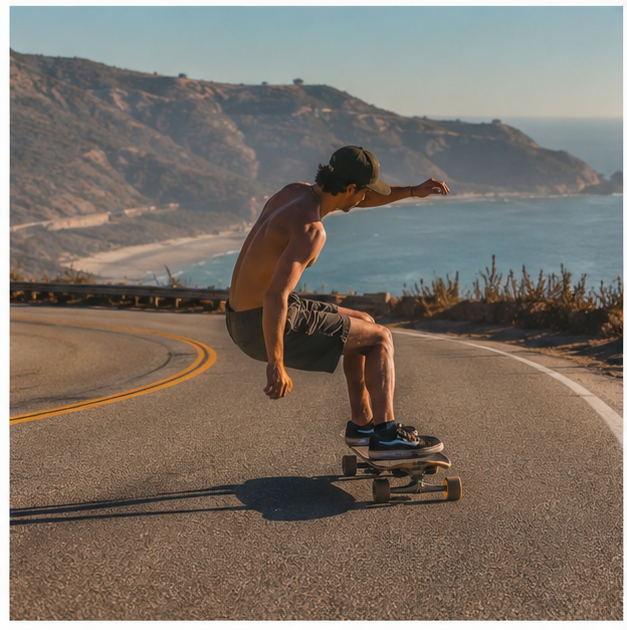
- Urban paths
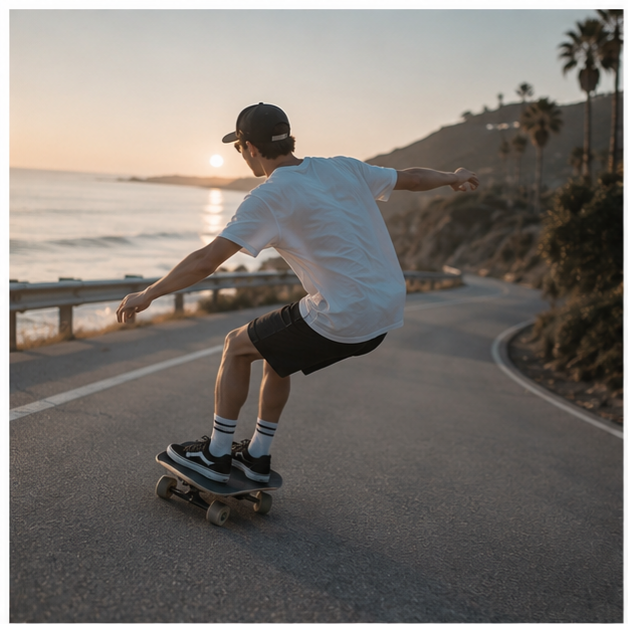
- Coastal roads
- Public open spaces
- Community riding areas
4.4 Primary Objectives
- Recreation
- Relaxation
- Movement enjoyment
- General physical activity
5. Educational Surfskating
5.1 Definition
Educational Surfskating refers to structured learning and teaching systems designed to support skill development and technical progression.
5.2 Characteristics
- Instruction-based participation
- Progressive learning systems
- Coaching and guidance
- Structured training environments
5.3 Educational Components
- Beginner instruction
- Technical development
- Safety education
- Coaching systems
5.4 Associated Structures
- Academies
- Training centers
- Certification programs
- Coaching systems
6. Performance Surfskating
6.1 Definition
Performance Surfskating refers to advanced riding emphasizing movement quality, style, technical ability, and expressive execution.
6.2 Characteristics
- High-level carving dynamics
- Technical refinement
- Creative interpretation
- Flow-oriented movement
6.3 Performance Elements
- Style
- Rhythm
- Technical control
- Dynamic transitions
6.4 Performance Contexts
- Demonstrations
- Media production
- Advanced training
- Exhibition environments
7. Competitive Surfskating
7.1 Definition
Competitive Surfskating refers to organized event participation involving structured evaluation or ranking systems.
7.2 Characteristics
- Event-based participation
- Judging frameworks
- Structured competition formats
- Comparative performance evaluation
7.3 Competition Formats
- Flow & style events
- Technical events
- Jam formats
- Hybrid formats
7.4 Evaluation Dimensions
- Flow
- Style
- Technique
- Difficulty
- Overall impression
8. Lifestyle & Cultural Surfskating
8.1 Definition
Lifestyle & Cultural Surfskating refers to the social, cultural, and identity-oriented dimensions of the discipline.
8.2 Characteristics
- Community participation
- Travel and tourism integration
- Lifestyle expression
- Creative and cultural identity
8.3 Typical Contexts
- Community gatherings
- Coastal riding culture
- Urban movement culture
- Social media and content ecosystems
9. Secondary Classification Categories
ISF additionally recognizes the following secondary classifications:
9.1 Environment-Based Classification
| Category | Description |
|---|---|
| Urban Surfskating | City-based riding environments |
| Coastal Surfskating | Oceanfront and coastal riding |
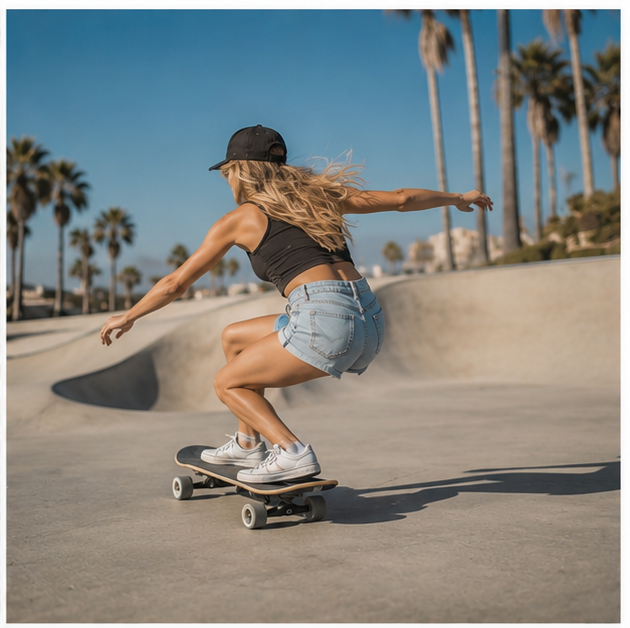
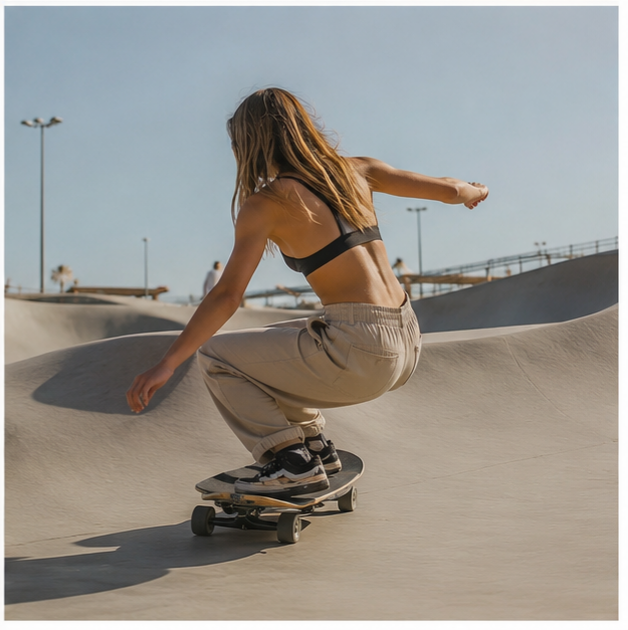
| Park Surfskating | Skatepark-oriented riding |
| Hybrid Terrain Surfskating | Mixed-environment riding |
9.2 Skill-Level Classification
| Level | Description |
|---|---|
| Foundation Level | Beginner participation |
| Intermediate Level | Developing technical ability |
| Advanced Level | High technical and expressive capability |
| Performance Level | Elite movement and control |
9.3 Participation Classification
| Category | Description |
|---|---|
| Individual Participation | Independent riding |
| Instructional Participation | Coaching-based activity |
| Institutional Participation | Academy or organizational involvement |
| Competitive Participation | Event-based involvement |
10. Structural Integration
The Surfskating classification system supports alignment across:
- Education systems
- Certification frameworks
- Competition structures
- Membership systems
- Venue accreditation
- Equipment standards
11. Classification Principles
ISF classification follows these principles:
11.1 Inclusiveness
All forms of Surfskating participation are recognized.
11.2 Flexibility
Categories may overlap depending on context.
11.3 Scalability
The system supports future expansion and specialization.
11.4 Global Consistency
Classification terminology remains internationally aligned.
12. Future Expansion
ISF may further develop classifications for:
- Specialized riding disciplines
- Professional competition divisions
- Educational specializations
- Adaptive and accessibility programs
13. Official Usage Framework
This classification standard is intended for use across:
- Educational systems
- Competition systems
- Certification structures
- Institutional frameworks
- Media and communication materials
14. Alignment Statement
This Surfskating Classification Standard operates under:
The International Surfskating Federation (ISF)
the global governing body for Surfskating
15. Conclusion
The Surfskating Classification Standard establishes a unified structural framework for organizing the diverse forms of Surfskating worldwide.
It supports:
- Clarity
- Consistency
- Educational alignment
- Institutional coordination
- Sustainable global development
throughout the international Surfskating ecosystem.

%20Instructor%20Qualification%20Standards)
%20Coach%20Certification%20Standards)